What is the Racketeer Influenced and Corrupt Organizations Act?
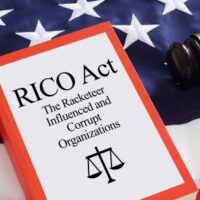
Are you currently being investigated for federal fraud-related charges that involve organized criminal activity? If so, you could potentially face charges under the Racketeer Influenced and Corrupt Organization Act (RICO). What is RICO, and what kinds of alleged criminal acts result in federal charges under this statute? Our federal criminal defense lawyers can explain in more detail below, and we can speak with you today if you are under investigation or facing charges under RICO or another federal criminal law.
Background of RICO
RICO became law in 1970 when it was enacted to amend the Organized Crime Control Act, but as the United States Department of Justice explains, the origins of this federal criminal law actually date back to the 1950s “when the problem of criminal infiltration of legitimate business was documented.” Prior to RICO, Congress enacted antitrust laws in the 1960s, but those laws ultimately were not considered sufficient to address the specific acts that would ultimately be addressed by RICO. With RICO, Congress aimed to specifically “combat patterned infiltration of legitimate business by ‘organized’ and ‘nonorganized’ criminal activity.”
Under RICO, it is “unlawful for anyone employed by or associated with any enterprise engaged in, or the activities of which affect, interstate or foreign commerce, to conduct or participate, directly or indirectly, in the conduct of such enterprise’s affairs through a pattern of racketeering activity or collection of unlawful debt.”
What does that mean in practice, and what elements does the government have to prove for a conviction?
Elements of RICO Charges
In order for a person to be convicted of RICO charges, the government must be able to prove all of the following, defined under the language of the law as cited above:
- Existence of an enterprise (i.e., an organization or group)
- Enterprise affects interstate or foreign commerce;
- Enterprise engaged in a pattern of racketeering activity, which is defined as two predicate acts within a 10-year period (i.e., wire fraud, mail fraud, money laundering); and
- Defendant participated in the enterprise or its conduct.
RICO charges can also, depending on the circumstances, involve conspiracy charges under the statute.
Contact a Tampa Criminal Defense Attorney Today for Assistance with RICO Charges and Any Other White Collar Charges You Are Facing
Charges under the RICO statute are among the most serious federal fraud-related charges a person can face, and RICO charges are often accompanied by additional charges under other federal fraud and white collar statutes. If you are convicted, you could be facing significant time in prison in addition to serious and substantial monetary penalties. Whether you have recently learned that you are being investigated or you have already been indicted, it is never too soon to seek legal help. As soon as possible, you should get in touch with an experienced Tampa federal criminal defense lawyer at the Law Offices of Daniel J. Fernandez, P.A. for assistance building the strongest possible defense in your case. Contact our firm today to learn more about the defense services we provide to clients facing RICO and other federal fraud and white collar charges.
Sources:
justice.gov/archives/jm/criminal-resource-manual-109-rico-charges
ojp.gov/ncjrs/virtual-library/abstracts/legislative-history-rico-racketeer-influenced-and-corrupt