

When and How Evidence Can Be Suppressed in Florida Criminal Cases
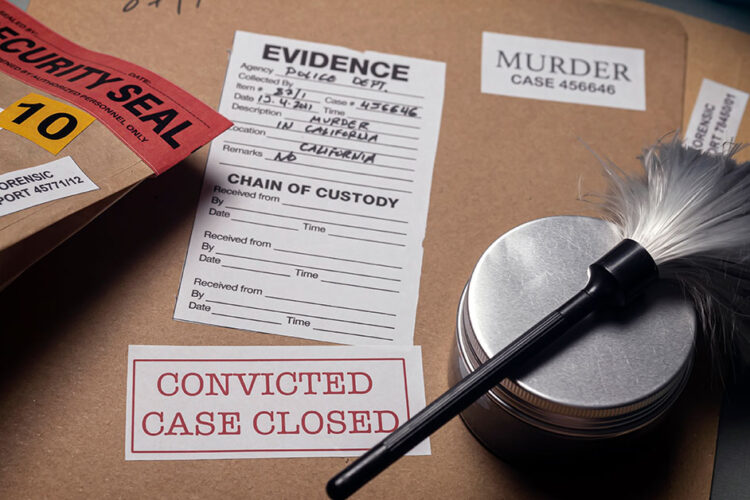
Can evidence be suppressed in a criminal case? Learn when evidence may be thrown out in Florida and how a criminal defense attorney can help.
If you have been arrested and law enforcement obtained evidence without a warrant, you may have the right to challenge that evidence in court. Suppressing evidence is a crucial legal process determining whether certain evidence is admissible in your case.
Evidence obtained illegally—such as through an unlawful search or seizure—may be thrown out or suppressed under the Fourth Amendment of the U.S. Constitution. This can significantly impact the prosecution’s case and, in some situations, lead to a dismissal of charges.
Understanding how evidence suppression works and when it applies can be vital to your defense. An experienced criminal defense attorney can evaluate your case and determine if your rights were violated.
When Can Evidence Be Suppressed?
Evidence suppression typically occurs when law enforcement violates constitutional rights during an arrest or investigation. Some common scenarios where evidence may be suppressed include:
- Illegal searches and seizures – If police obtain evidence without a warrant, probable cause, or an applicable exception, that evidence may be inadmissible.
- Lack of probable cause – If an arrest was made without probable cause, evidence obtained afterward could be suppressed.
- Failure to read Miranda rights – If a suspect is interrogated in custody without being informed of their rights, their statements may be inadmissible.
- Coerced confessions – If law enforcement forces or pressures a suspect into making a confession, that confession may be thrown out.
- Chain of custody errors – If evidence is mishandled or tampered with before trial, it may be challenged as unreliable.
The prosecution has the burden of proof to show that the evidence was lawfully obtained. If they fail to do so, the judge may rule in favor of suppressing the evidence.
What Happens to Evidence Obtained During an Illegal Stop or Arrest?
Under the Fourth Amendment of the U.S. Constitution and Article I, Section 12 of the Florida Constitution, individuals have the right to be free from unreasonable searches and seizures. If law enforcement stops or arrests someone without legal justification, any evidence gathered as a result may be suppressed.
For example, if police stop a driver without reasonable suspicion and then find illegal drugs in the vehicle, those drugs may not be admissible in court. Without that evidence, the prosecution may have no case, leading to charges being dropped.
Understanding Police-Citizen Encounters
Police interactions with citizens generally fall into three categories:
- Consensual Encounters – A person is free to leave, and no coercion is involved. Police may ask questions, but the individual is not obligated to answer.
- Investigatory Stops (Terry Stops) – Police may briefly detain someone if they reasonably suspect that a crime has been committed, is being committed, or is about to be committed. This requires more than a vague hunch—it must be based on specific facts.
- Arrests—Police must have probable cause to make an arrest, which means there is enough evidence to suggest that a person has committed a crime.
If an officer detains someone without reasonable suspicion or arrests them without probable cause, any evidence obtained afterward may be challenged in court.
How a Suppression Hearing Works
A suppression hearing is a legal proceeding where the defense requests that certain evidence be excluded from trial. The judge will hear arguments from both sides and decide whether the evidence should be suppressed.
During the hearing:
- The defense presents legal arguments and evidence showing that law enforcement violated the defendant’s rights.
- The prosecution must prove that the evidence was obtained lawfully.
- Witnesses, including the arresting officers, may be called to testify.
If the judge rules in favor of the defense, the evidence will not be used at trial. In some cases, this may result in charges being dropped, especially if the suppressed evidence was critical to the prosecution’s case.
Why You Should Contact a Criminal Defense Attorney
If you have been arrested and believe that evidence was illegally obtained, it is crucial to speak with a criminal defense attorney as soon as possible. A skilled lawyer can:
- Review the details of your case to determine if your rights were violated.
- File motions to suppress evidence that was unlawfully obtained.
- Represent you at a suppression hearing to challenge the prosecution’s evidence.
- Work to have charges reduced or dismissed if key evidence is thrown out.
At the Law Office of Daniel J. Fernandez, P.A., we aggressively protect our clients’ rights. If law enforcement violated your constitutional protections, we will challenge the evidence and seek the best possible outcome for your case.
Why Daniel J. Fernandez, P.A. is the Best Choice
If you or a loved one has been arrested in Tampa, Florida, and need a strong legal defense, immediately contact the Law Office of Daniel J. Fernandez, P.A. Our firm has extensive experience handling suppression hearings and fighting unconstitutional searches and seizures.
Call (813) 229-5353 today for a free consultation. Let us review your case and determine if the evidence against you can be suppressed. Your future may depend on the right defense strategy—don’t wait to get the legal help you need.